The Hill With No Trailhead: How View Park Actually Stays in Shape
September 3, 2026
September 3, 2026
Around six most evenings, someone starts up Valley Ridge Avenue at a jog. Not power walking, not strolling the dog. An actual uphill sprint, the kind that turns a residential street into interval training. There's no trailhead sign, no mile marker, no listing on any hiking app. If you didn't already live here, you'd have no way of knowing this street doubles as the neighborhood's steepest workout.
That's the thing about View Park's fitness culture. The unofficial version runs on a residential street. The official version, a few blocks away, just got wired into a 13-mile county trail system. Neither one advertises itself, but only one of them shows up on a map.
Valley Ridge Avenue isn't zoned as recreation. It's not maintained by any parks department, and it doesn't appear in the county's trail inventory. What it has instead is grade: a steep enough incline that residents have quietly turned it into a hill-repeat workout, the kind of thing you learn about from a neighbor rather than a website. It works because it's short, close, and steep enough to matter, which is exactly why it never needed a sign. A street doesn't require permission to become a gym. It just needs enough neighbors willing to use it that way.
Compare that to Rueben Ingold Park, View Park's actual named park, which opened on August 17, 1971, and sits directly adjacent to the much larger Kenneth Hahn State Recreation Area. Ingold Park has always been the neighborhood's formal answer to open space. Valley Ridge never needed to be formal. It just needed to be steep and close, which made it the workout most residents actually default to on a weeknight when Kenneth Hahn feels like a drive rather than a walk.
Here's what changed the calculation. Ingold Park and Kenneth Hahn used to function as two separate green spaces that happened to sit next to each other. They're now connected by the Stocker Corridor Trail, a pathway built specifically to link the two. That connector isn't a local curiosity. It's one of six named segments in the Park to Playa Regional Trail, a 13-mile route that Los Angeles County built to run from the Baldwin Hills Parklands all the way to the Pacific Ocean.
The six segments, in order from the Baldwin Hills side toward the coast:
What that means for someone standing at Rueben Ingold Park on a Saturday morning is that the walk in front of them isn't just a loop around the block anymore. It's the starting point of a trail that, in theory, could take them all the way to Marina del Rey without ever touching a street. Most people won't walk all 13 miles in one go, but the point isn't the full distance. It's that a neighborhood park most people treated as a closed loop is now a documented on-ramp to something much larger.
On weekends, the county also runs a free shuttle called The Link, which connects the Metro Expo Line's La Cienega station to both Kenneth Hahn and the Baldwin Hills Scenic Overlook, operating Saturdays, Sundays, and holidays from 8 a.m. to 6 p.m. It's a small detail, but it means the trail system isn't just for people who drive in with a car. Anyone taking the K Line can get off at La Cienega and catch a shuttle straight to the trailhead, no parking lot required, which matters on the weekends when the Overlook lot fills early.
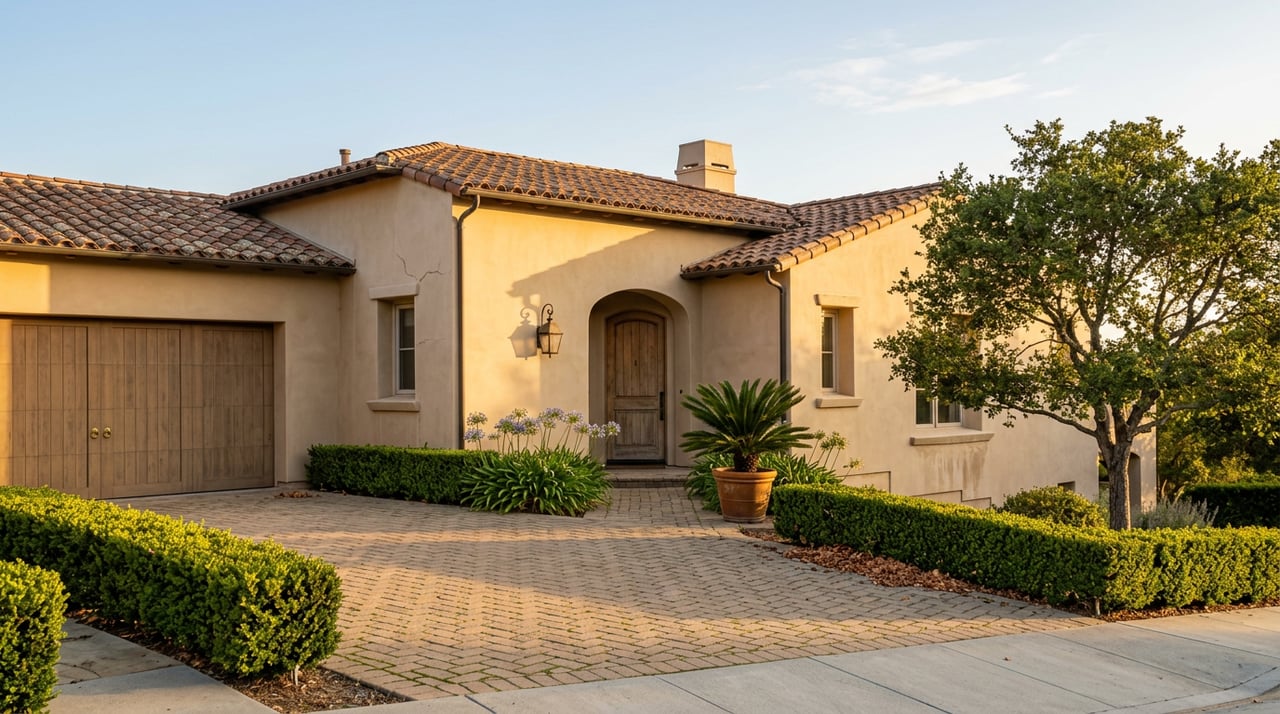
If Valley Ridge and the Stocker Corridor make up View Park's vertical loop, the neighborhood also has a horizontal one, and it runs at a much slower pace. Mount Vernon Drive is where residents go to look rather than sweat. The street is lined with the Period Revival architecture that got the entire neighborhood listed on the National Register of Historic Places on July 12, 2016, a designation that makes View Park the largest historic district in the country recognized specifically for African American history, and one built around 1,752 single-family homes.
That listing didn't happen by accident. The View Park Conservancy led the nomination effort, and close to 700 residents personally donated more than $100,000 to fund the historic research required to complete it. The neighborhood is also known for its summertime home and garden tours, giving neighbors a rare chance to walk through interiors that are usually only visible from the sidewalk.
Mount Vernon Drive itself holds one particular landmark that separates rumor from record. Several View Park homes are attributed, sometimes loosely, to architect Paul Williams, one of the most significant Black architects in American history. Only one of those attributions is actually documented: the residence at 4351 Mount Vernon Drive. Everything else is neighborhood lore, interesting but unverified. A few blocks over on Southridge Avenue sits the Ray Charles residence, a home built in 1965 that's still just another house on the walk unless you already know its name.
The walk has a natural endpoint too. Head down toward Slauson and Overhill and you'll find Simply Wholesome, which occupies a building originally built as a Googie-style Wich Stand, one of the mid-century drive-in designs that used to define that architectural style across Los Angeles. It's a fitting place to end an architecture walk: a building that's been repurposed rather than replaced, in a neighborhood that has done the same thing with almost everything else.
What ties Valley Ridge Avenue to Mount Vernon Drive isn't proximity. It's that both became neighborhood institutions without anyone formally designating them as such. The county eventually caught up to one of them, connecting Ingold Park to Kenneth Hahn and stitching the whole thing into a 13-mile regional trail. The other, Valley Ridge, still runs entirely on word of mouth, the kind of local knowledge that never makes it onto a trail app because it was never meant to be a trail in the first place.
That's a fair description of View Park generally. The neighborhood has always had more going on than its official infrastructure suggests, whether that's a residential street doing a park's job or a stretch of sidewalk holding more architectural history than most museums. The formal recognition, when it comes, tends to arrive years after residents already knew what they had.
If you're a View Park neighbor thinking about what your home is worth in a market that increasingly recognizes what this neighborhood has always known, the team at The Jones Group Realtors has spent decades working these streets and understands the difference between a listing sheet and a lived-in neighborhood. Schedule a free consultation whenever you're ready to talk through what's next.
Stay up to date on the latest real estate trends.
Get assistance in determining current property value, crafting a competitive offer, writing and negotiating a contract, and much more. Contact me today.