How to Evaluate South Los Angeles Investment Properties
April 23, 2026
April 23, 2026
If you are thinking about investing in South Los Angeles, the opportunity can look promising at first glance, but smart buyers know the details matter. This is a renter-heavy part of Los Angeles with older housing stock, mixed property types, and block-by-block differences that can change the numbers fast. When you know what to evaluate before you buy, you can make better decisions, avoid costly surprises, and build a more realistic investment plan. Let’s dive in.
South Los Angeles stands out because it sits inside one of the country’s most expensive housing regions while still offering a wide mix of residential property types. According to the Los Angeles City Planning South Los Angeles profile, the area had 279,729 residents and 88,786 dwelling units based on 2020 to 2024 ACS 5-year estimates.
That same profile shows 69.2% renter-occupied housing and 6.9% vacant units, which points to a market with strong renter presence. At the same time, a $57,500 median household income and a 23.5% poverty rate suggest that affordability matters when you underwrite rents, renovation costs, and long-term hold strategy.
Before you look at finishes, floor plans, or future upside, study the rental picture. A renter-heavy market can be attractive, but you still need to ask whether your projected rents fit what the local market can reasonably support.
HUD’s Q2 2025 regional housing market data shows the Los Angeles-Long Beach-Anaheim metro at 4.6% vacancy and $2,414 average monthly rent. HUD’s FY2025 rent benchmark data lists $2,625 as the fair-market-rent benchmark for a two-bedroom unit in the Los Angeles-Long Beach-Glendale area.
These figures are useful reality checks, not substitutes for true local lease comps. If your pro forma depends on rents far above nearby comparable leases, your deal may look better on paper than it will in practice.
When you review a property, focus on questions like these:
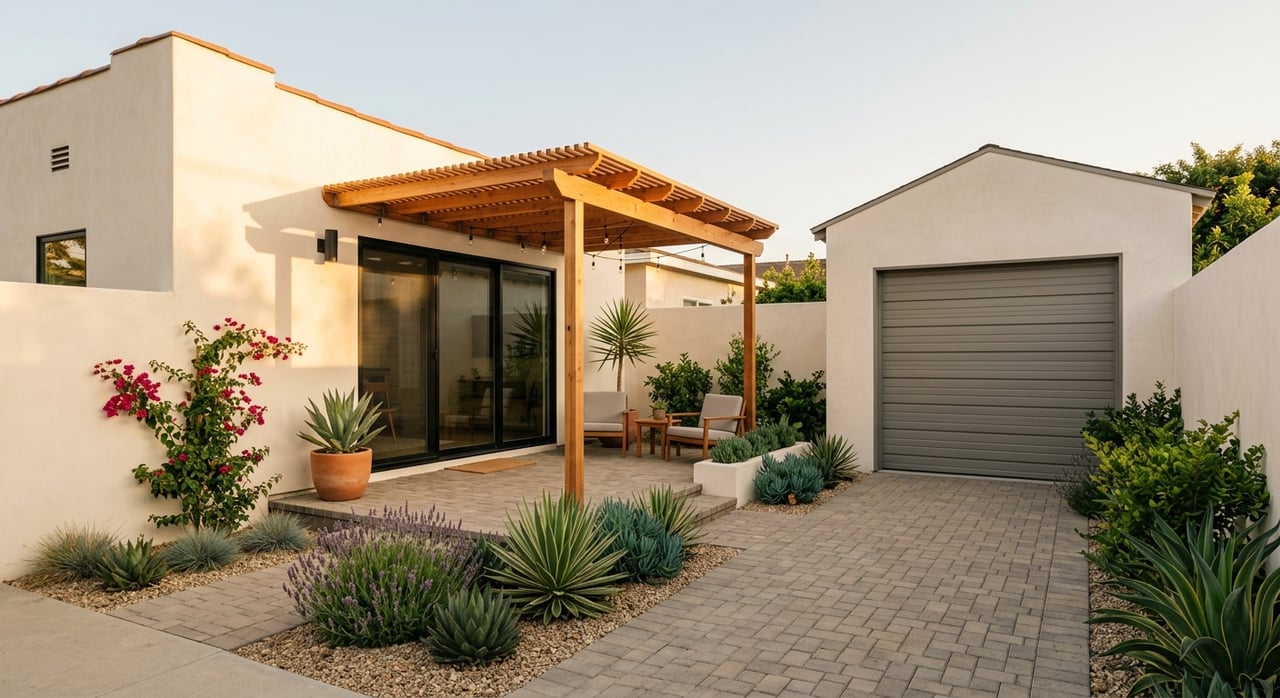
South Los Angeles is not one uniform housing product. The area includes single-family homes, duplexes, fourplexes, bungalow courts, and courtyard apartments, according to SurveyLA’s South Los Angeles report.
The built environment also varies by street. The South and Southeast LA planning analysis notes that single-family land uses appear throughout the community, many houses have subordinate second units, and streets near major boulevards often mix single-family homes with duplexes to fourplexes.
That matters because your strategy should match the property type. A detached home, a duplex on a mixed-use corridor, and a small multifamily building may all create opportunity, but they do not carry the same renovation path, valuation method, or rental risk.
A lot of South Los Angeles housing is older, which can create value-add potential but also raise the odds of deferred maintenance. The City Planning profile shows that 42.3% of dwellings were built in 1939 or earlier, while 60.5% of units are multiple-housing and 39.2% are single-housing units.
Older properties often offer character, usable layouts, and repositioning upside. They can also bring hidden costs that affect your budget, timeline, and return.
Buyers should look closely at:
A renovation budget that looks manageable at first can expand quickly if the property needs more than cosmetic work. That is why due diligence is just as important as purchase price.
For many buyers, the strongest opportunity in South Los Angeles is not large redevelopment. It is modest-scale improvement, thoughtful renovation, or adding usable residential space where allowed.
The planning analysis describes a landscape of generally small-scale multifamily buildings, often no more than two stories, with average parcels of about 5,000 square feet. That profile tends to favor renovation-led strategies, additions, and selective unit expansion over major ground-up plays.
Los Angeles City Planning’s Missing Middle LA initiative also points to pathways centered on smaller neighborhood-scale housing types such as duplexes, small-lot townhomes, and ADUs. Not every lot will qualify for these options, but some parcels may support added value through an extra unit, an ADU, or a more efficient layout.
Depending on the parcel and existing improvements, potential value drivers may include:
The key is to verify the opportunity before you price it in.
Not every property is a blank canvas. SurveyLA highlights historic districts and period-revival resources in South Los Angeles, which means some homes or buildings may require a more careful approach before exterior changes or teardown plans are considered.
If you assume a major redesign is possible without checking this first, you could waste time and money chasing a strategy that does not fit the property. Early review of historic context can help you decide whether the better investment play is restoration, light modernization, or a different property altogether.
In a block-sensitive market, valuation discipline matters. Fannie Mae’s comparable sales guidance says the best comps come from the same market area and should be similar in site, room count, finished area, style, and condition.
Fannie Mae also notes that the sales comparison approach should include at least three closed comparables, with sales from the last 12 months generally preferred. That is especially important in South Los Angeles, where lot size, condition, and housing type can shift value quickly from one micro-area to another.
A strong comp review should consider:
If a property is unusual, older, or rarely traded, Fannie Mae allows older or competing-market sales when the appraiser explains the choice and adjusts for differences. That flexibility is helpful, but it also means buyers need to be careful about stretching for a number that the market may not support.
A deal should still make sense when your assumptions get tested. For rent growth, expenses, and exit value, conservative models are often more defensible than aggressive ones.
Freddie Mac’s 2025 multifamily outlook said demand remained strong, but rent growth was expected to stay positive and below the long-term average. It also projected vacancy to rise to 6.2% and noted that elevated interest rates were flattening cap rates.
For you, that means it is wise to underwrite with discipline. If the return only works under best-case conditions, it may not be the right buy.
Use a model that accounts for:
South Los Angeles is the kind of market where broad averages only tell part of the story. Block-to-block differences in housing type, lot geometry, historic context, and comparable sales can influence what a property is truly worth and what kind of upside is actually realistic.
An experienced local agent can help you narrow the search, spot which recent sales are truly comparable, and identify whether a property’s value-add potential is cosmetic, unit-addition based, or more complex. That kind of guidance can help you avoid overpaying for a narrative that the property or micro-market cannot support.
If you want help evaluating an opportunity in South Los Angeles, Greg Jones offers neighborhood-focused guidance backed by decades of local market experience. Whether you are comparing residential investment options, reviewing valuation, or pressure-testing a value-add plan, a thoughtful local perspective can help you move with more confidence.
Stay up to date on the latest real estate trends.

Get assistance in determining current property value, crafting a competitive offer, writing and negotiating a contract, and much more. Contact me today.